
Have you ever felt the need to step away from everything and simply be?
That’s exactly what I did when a chance encounter led to an invitation for an “energy recharge journey.”
The moment I heard it, something inside me whispered, I have to go.
So I followed my heart.
Our destination was Miyazaki — a land where the warmth of the southern sun meets the living presence of ancient mythology. Together with kindred spirits, we began a three-day journey.
Long revered as the place where the gods descended from heaven, this land still carries the quiet prayers of those who lived in harmony with nature. As we wandered through sacred shrines and stepped into the world of myth, the tension of everyday life began to melt away.
This retreat felt like coming home to myself.
Here, I want to share the sacred places we visited — and the quiet shifts they awakened within me.
If you’ve been feeling disconnected, overwhelmed, or simply in need of a reset, this journey might resonate with you.
Day 1: Wrapped in the Energy of the Sea and Sun
Udo Jingu — A Cave Sanctuary by the Sea
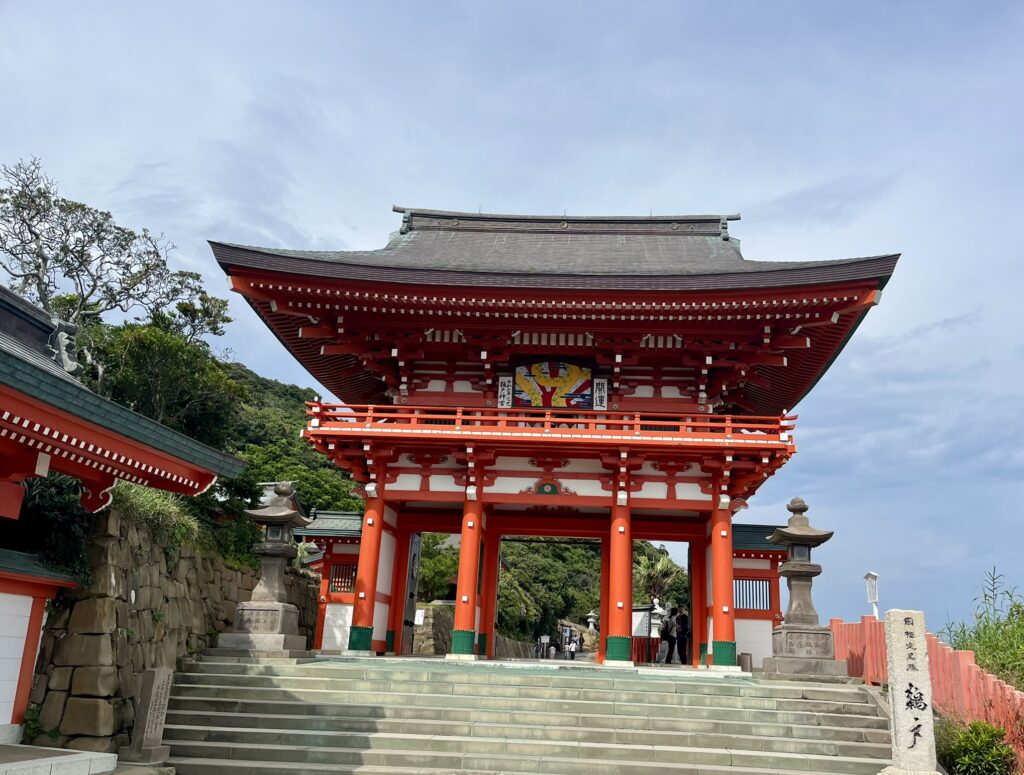
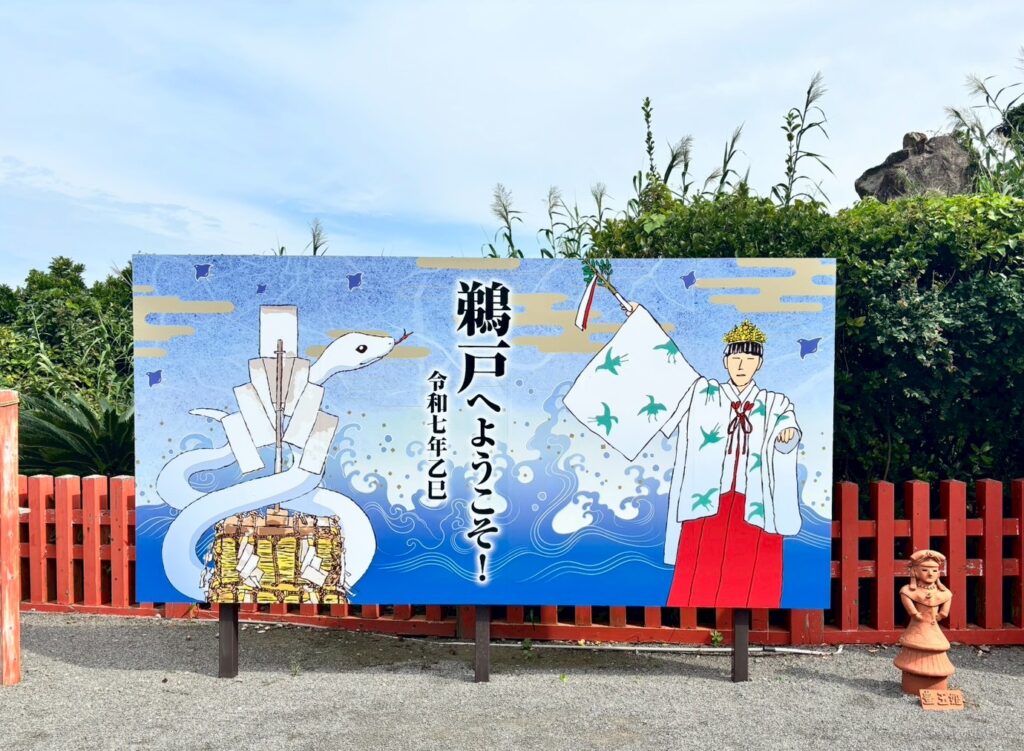
Our first stop was Udo Jingu, a shrine built into the cliffs along the Miyazaki coast.
Said to date back over 2,000 years, this unique shrine takes its name from udo, meaning “hollow.” True to its name, the main hall sits inside a sea cave — a sacred space unlike any other.
The deity enshrined here is Hikonagisaketakeugayafukiaezu no Mikoto, father of Emperor Jimmu, Japan’s legendary first emperor.
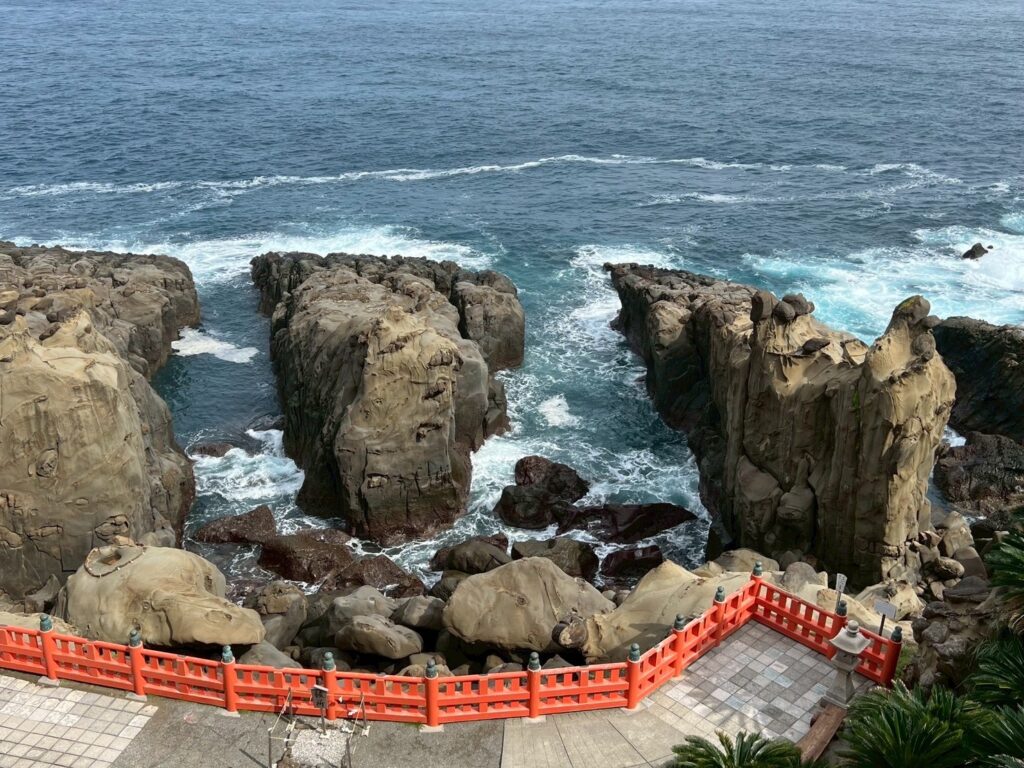
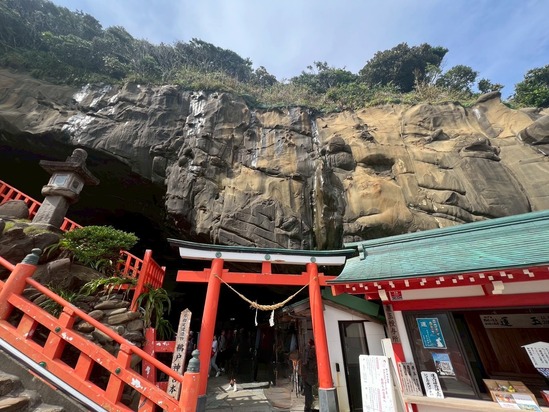
Stepping inside the cave, cool air brushed against my skin, carrying the scent of the sea. The sound of waves echoed softly around me. I felt fully immersed in nature, engaged through every sense.
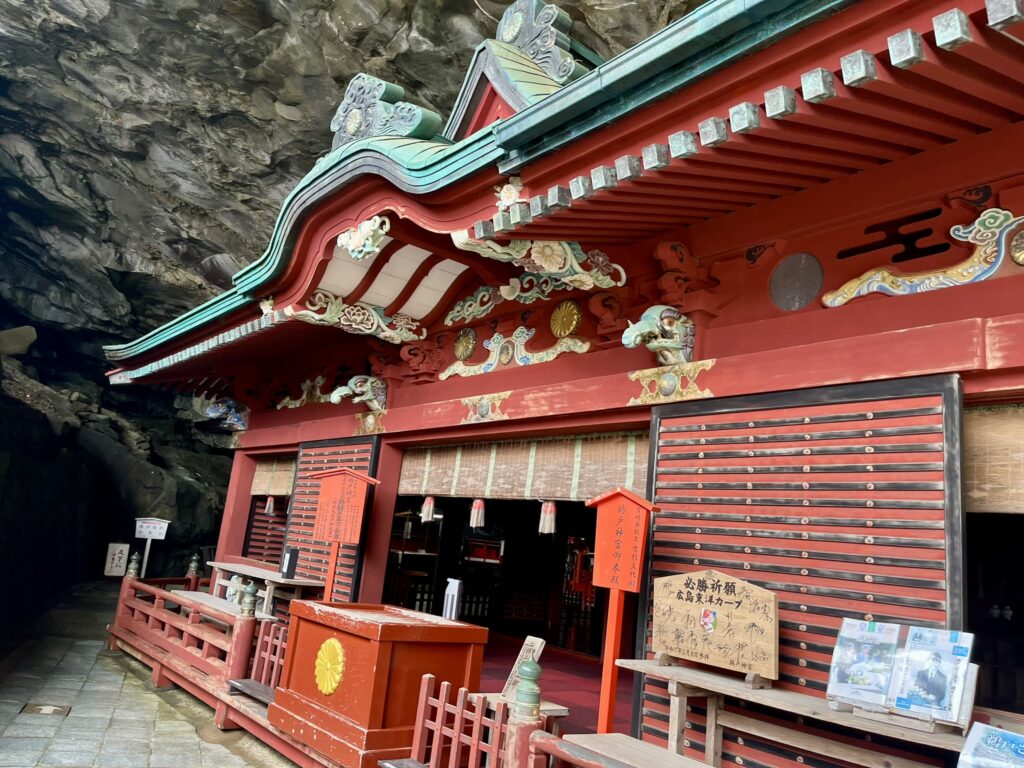
The sacred water that drips from the cave ceiling is said to bring blessings for safe childbirth and childcare.
But what captured my heart was theUndama-nage — the “luck ball toss.”
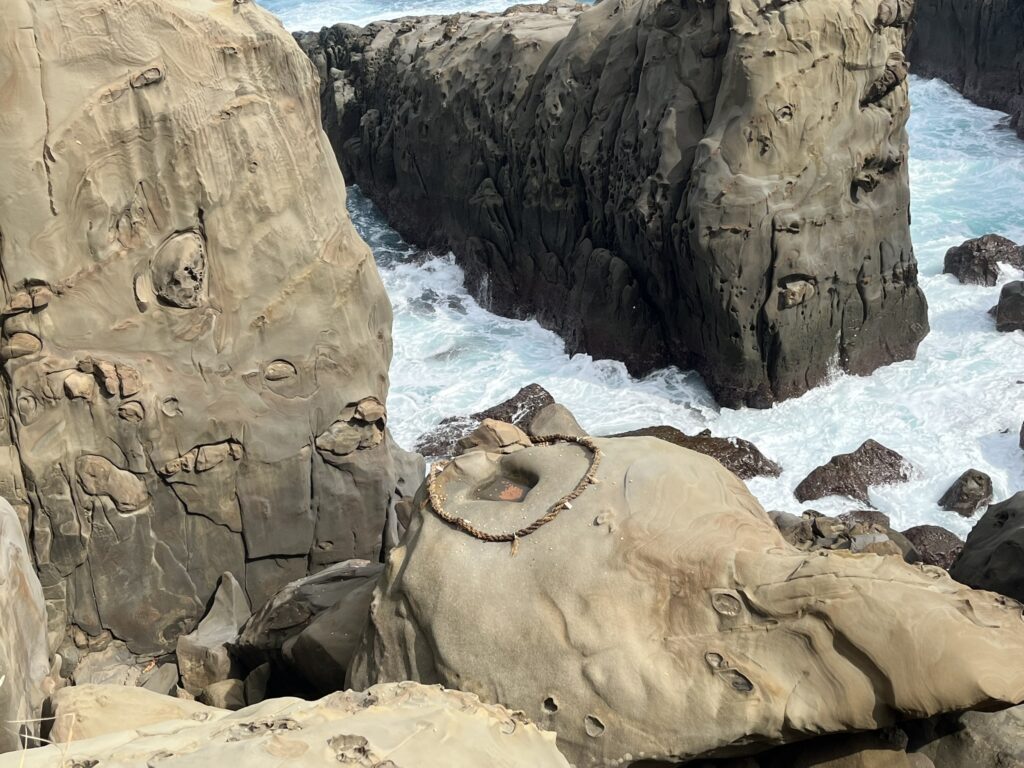
At this spot, you toss a small unglazed clay ball into a hollow in the “Kame-ishi” (Turtle Stone) while making a wish—if it lands inside, your wish is said to come true.
According to legend, this stone is actually a giant turtle that carried Toyotama-hime no Mikoto and later turned into rock.
With my wish in mind, I couldn’t help but get seriously into it.
My friends joined in too, and we all got caught up in the excitement—“It’s in!” “So close!”
Mine made it inside the rope, but bounced out before landing in the hollow… a bit disappointing!
Still, they say your wish may come true even then, so I’ll take it.
More than anything, laughing and trying together made it such a joyful and memorable moment.
Udo Shrine is believed to bring blessings for relationships, safe childbirth, parenting, harmonious marriage, and safe travels at sea.
In this place where the timeless love story of Yamasachihiko and Toyotama-hime still lingers, I could truly feel an energy of connection and harmony all around.
Sun Messe Nichinan — Where Sky, Sea, and Silence Meet
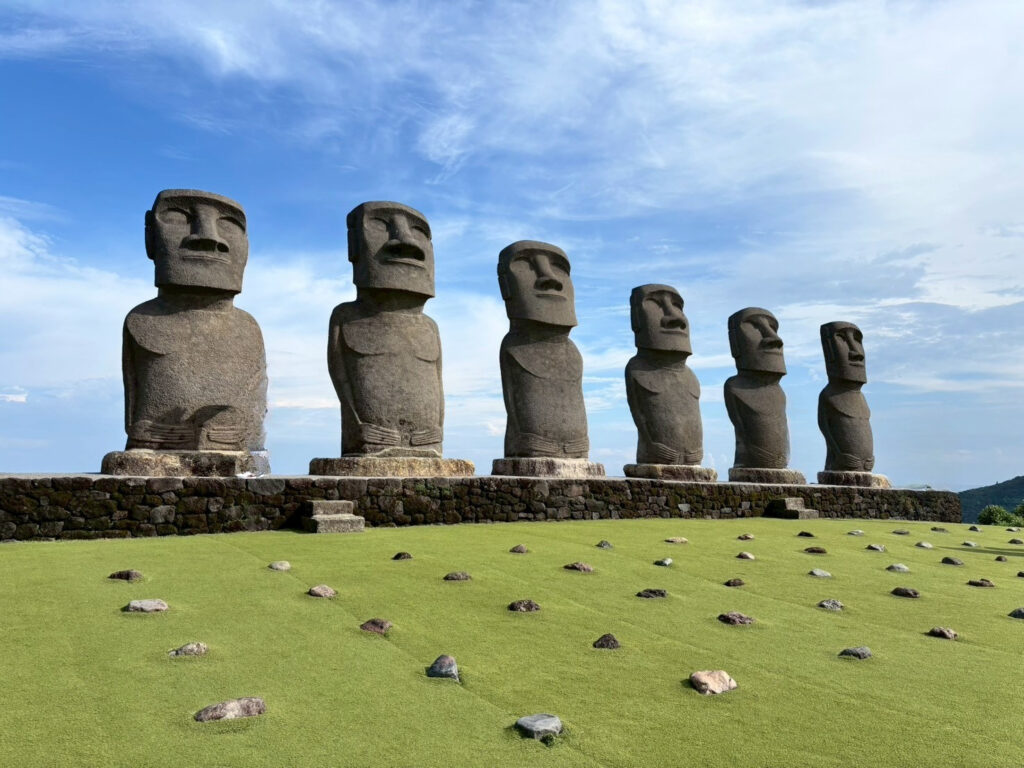
Next, we headed to Sun Messe Nichinan, famous for its Moai statues—about a 20-minute drive from Udo Shrine along a pleasant coastal road hugging the Pacific.
Seven Moai stand on a hilltop overlooking the ocean, and in the sunlight they radiated a quiet, almost timeless energy. What makes them truly special: these are the only Moai in the world officially authorized for full-scale reproduction by the Council of Elders of Easter Island.
So why Moai in Miyazaki?
The story goes that in 1992, a Japanese company spent three years restoring 15 fallen Moai on Easter Island—entirely at their own expense, free of charge. As a gesture of gratitude, the Council of Elders and the islanders granted special permission for these replicas. The dramatic scenery of the Nichinan coastline, said to resemble Easter Island itself, is also thought to have played a role.
The word Moai carries a beautiful meaning: mo meaning “future” and ai meaning “to live“—together, “to live into the future.”
Each of the seven Moai is believed to bestow a different blessing.
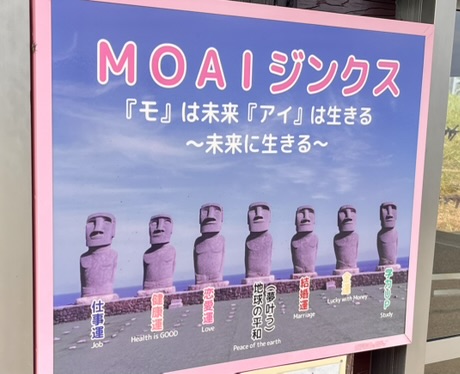
From left to right, each Moai statue represents: career success, health, love, world peace, marriage, wealth, and academic success.
It’s said that touching a Moai can help your wish come true—and the one I felt drawn to was “world peace.”
Placing my hand on the statue in the center, I quietly made my wish.
Everyone chose a different Moai, and it was heartwarming to see each person pausing, wondering “Which one should I choose?” before making their wish.
After that, we walked up to a hilltop observatory.
The ocean breeze brushed against my cheeks, and I could feel my heart becoming lighter with every step.
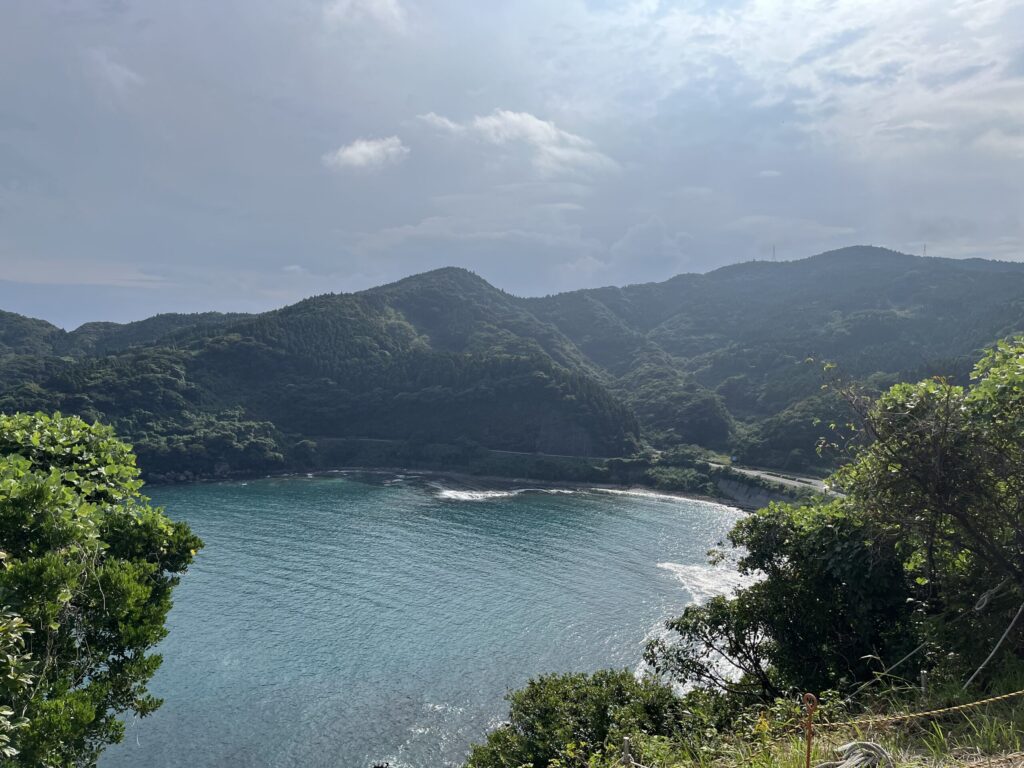
From the hilltop observatory, the view of the Pacific Ocean was not only breathtakingly beautiful,
but also carried a sense of deep purification—as if simply gazing at it could cleanse everything within.
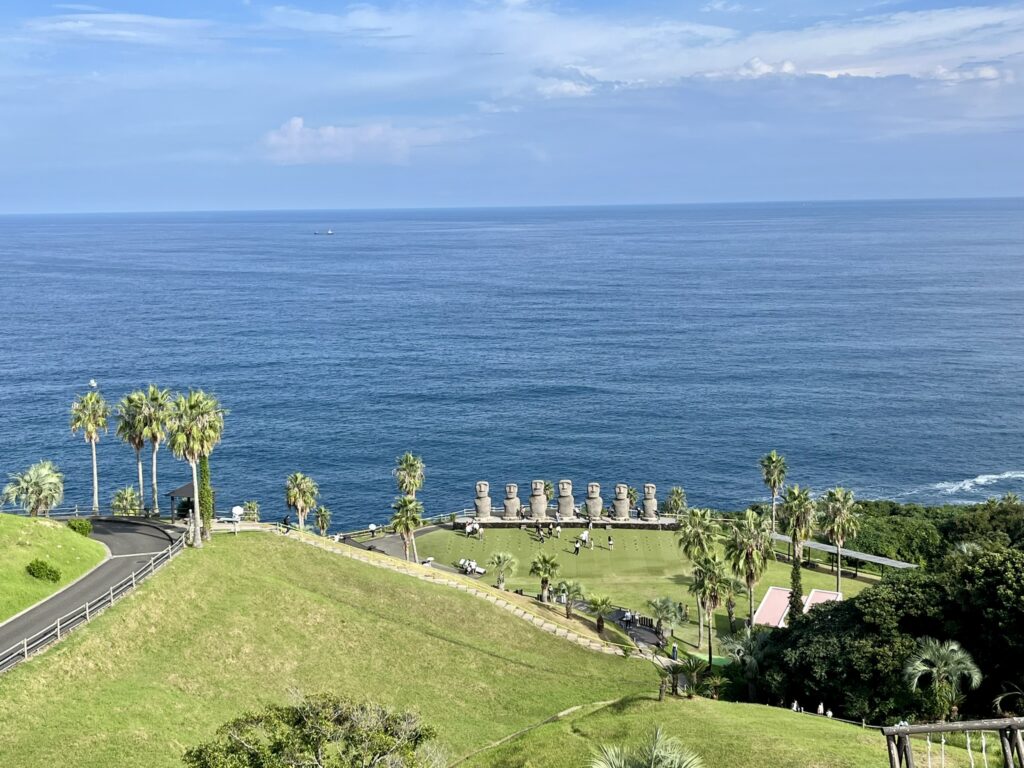
Taking a deep breath in the midst of nature—
I realized how something so simple could make me feel so light.
And in that moment, I was filled with an overwhelming sense of gratitude and joy—
a deep feeling of “I’m so glad to be alive!”
Aoshima Shrine — An Island of Quiet Magic
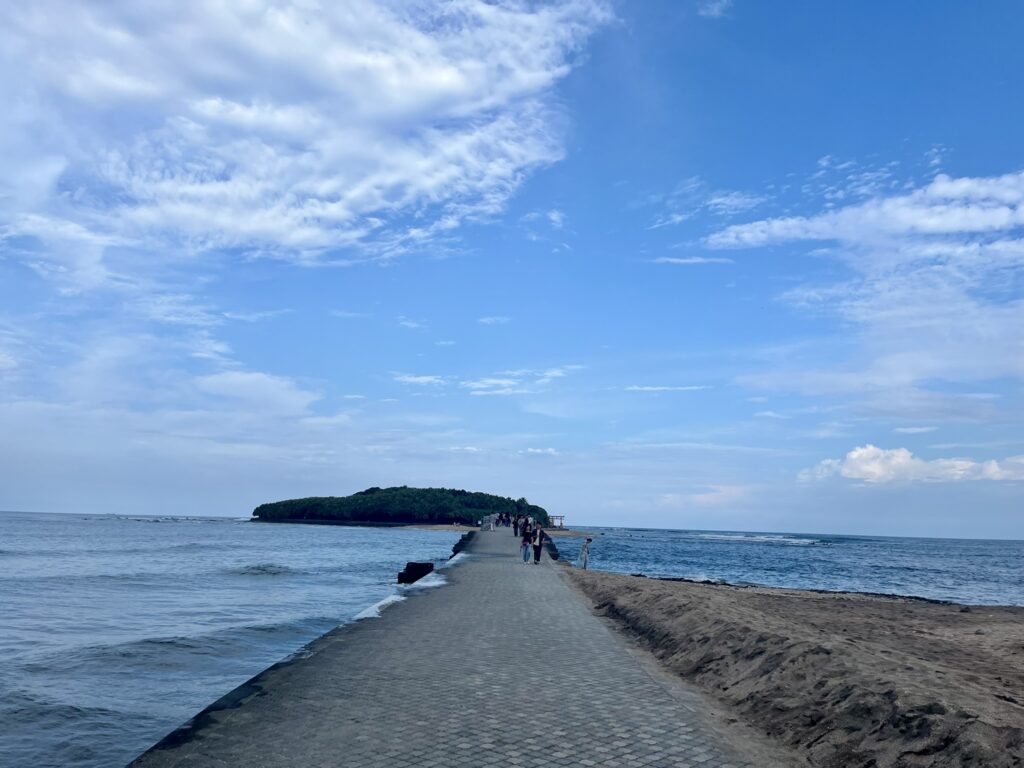
To wrap up the day, our final stop was Aoshima Shrine, about a 30-minute drive from Sun Messe Nichinan.
The entire island is considered sacred ground—making it quite unique, as the whole of Aoshima, a small island with a circumference of about 1.5 km, serves as the shrine precinct.
What immediately catches the eye, however, are the wave-like rock formations surrounding the island, known as the “Devil’s Washboard.”
Formed by the uplifting of the seabed, these unusual rocks have been designated a national natural monument.
At low tide, the exposed rock surface spreads out like a vast, natural washboard—creating a truly breathtaking and otherworldly landscape.
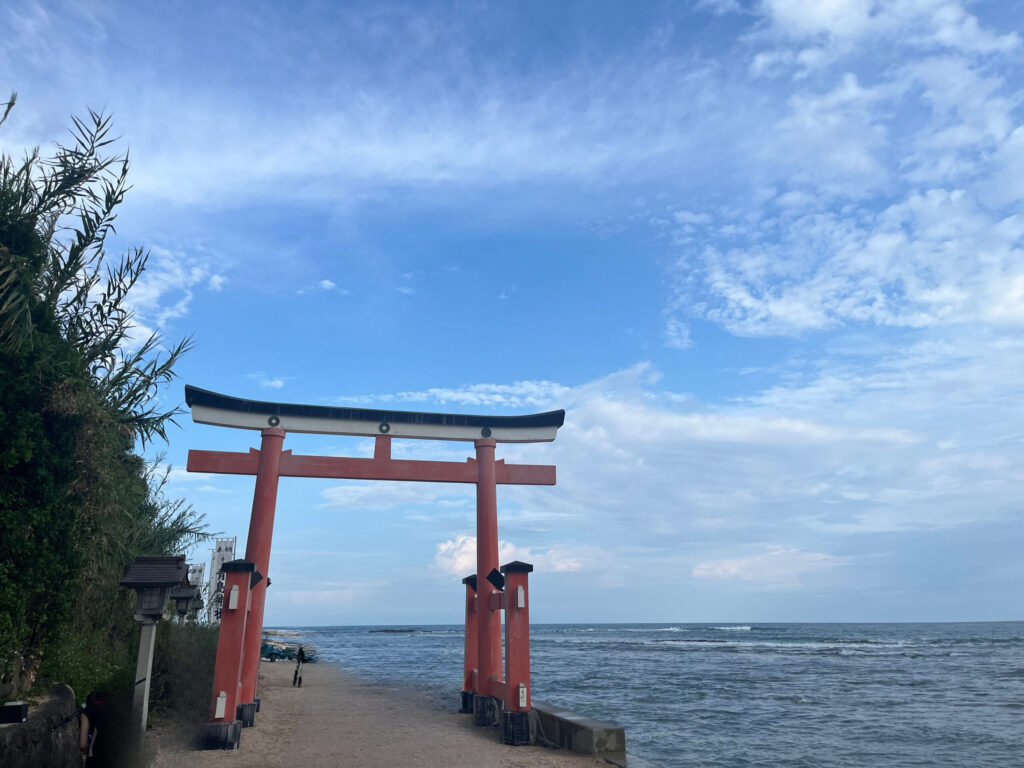
Enshrined here are Hikohohodemi-no-Mikoto (Yamasachihiko), Toyotama-hime no Mikoto, and Shiotsutsu-no-Ōkami.
Just like Udo Shrine, this is also a setting of the “Umisachi-Yamasachi” myth—the legendary tale of the sea and mountain brothers.
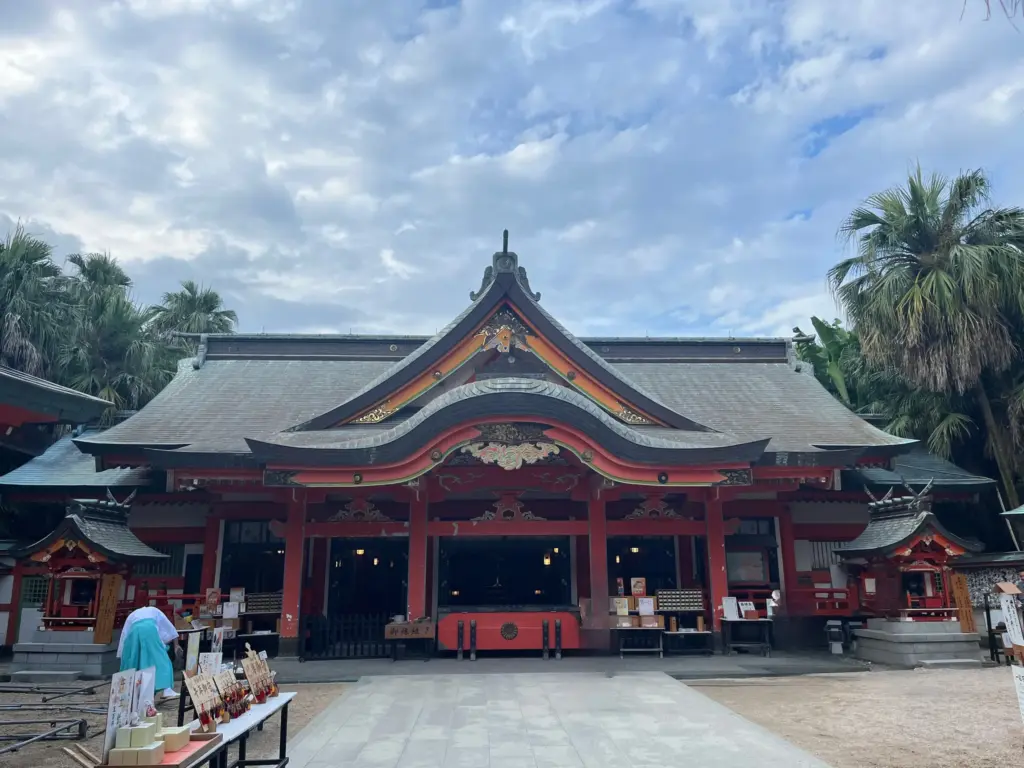
Known for its blessings for relationships, safe childbirth, and safety in travel—both at sea and on the road—it’s an especially popular power spot among young women and couples.
The entire island of Aoshima is also designated as a special natural monument, home to lush subtropical vegetation.
Simply being there, I could feel my heart opening and becoming lighter.
Indulged in the local cuisine
After a full day of walking—so much so that we even forgot to eat lunch—we recharged with a delicious meal.
We raised a toast while reflecting on the day’s experiences.
Savoring dishes unique to the region is truly one of the greatest pleasures of traveling.
The highlight of the evening was fresh spiny lobster sashimi!
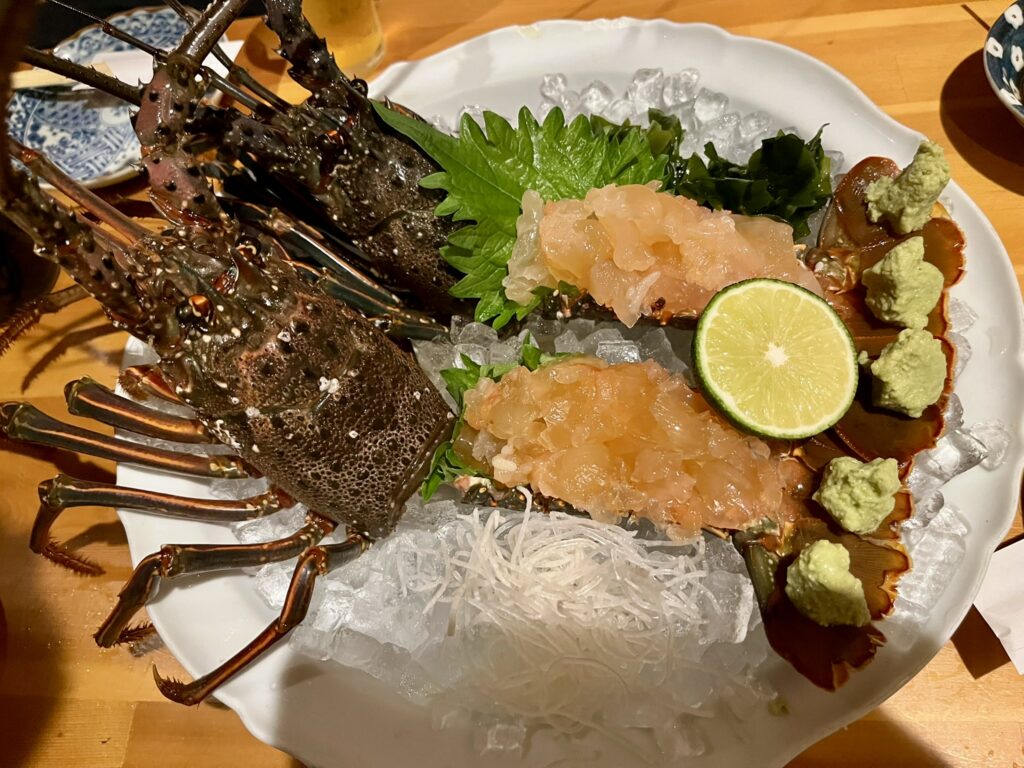
The spiny lobster, freshly taken from the tank right in front of us, was so fresh it was still moving!
Seeing spiny lobster for the first time, I couldn’t help but get a little excited.
And the taste…
The meat was firm and perfectly springy—so delicious that it instantly brought a smile to my face.
It was truly a moment of pure bliss, leaving both my heart and my stomach completely satisfied.
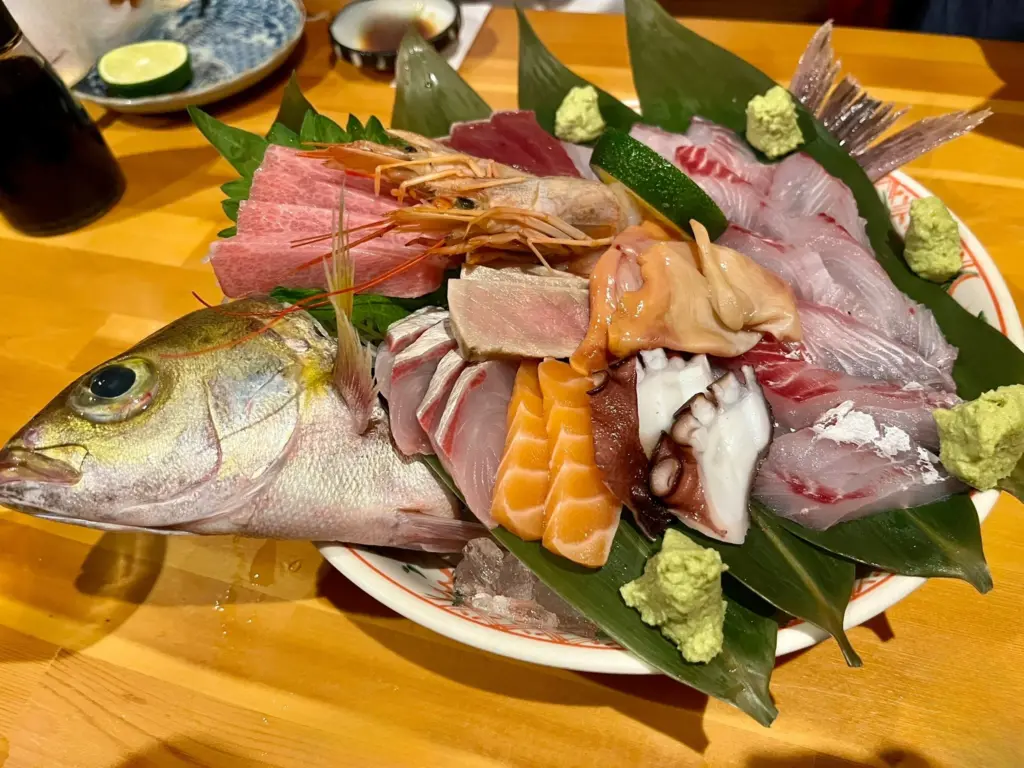
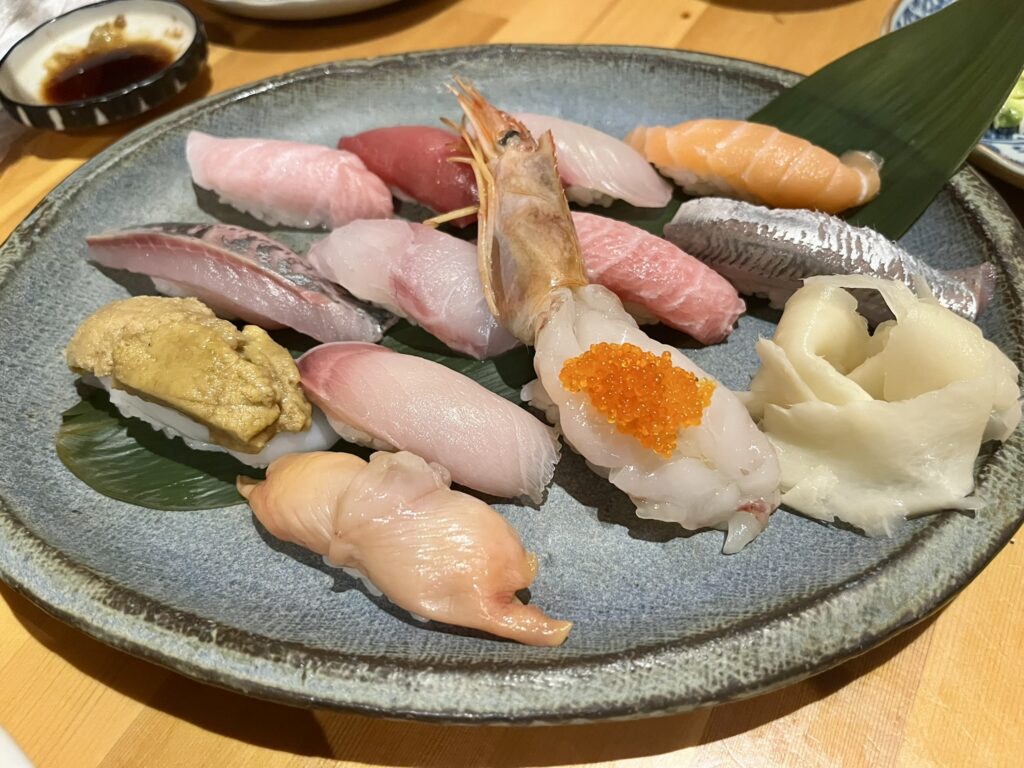
We also enjoyed a wide variety of fresh local seafood—sashimi, sushi, and so much more…
It was an incredibly satisfying spread.
And more than anything, sharing that meal with dear friends turned the day’s fatigue into something warm and comforting.
Day 2: Seeing Myself in the Myths
Amano-Iwato Shrine — Where Light Returns
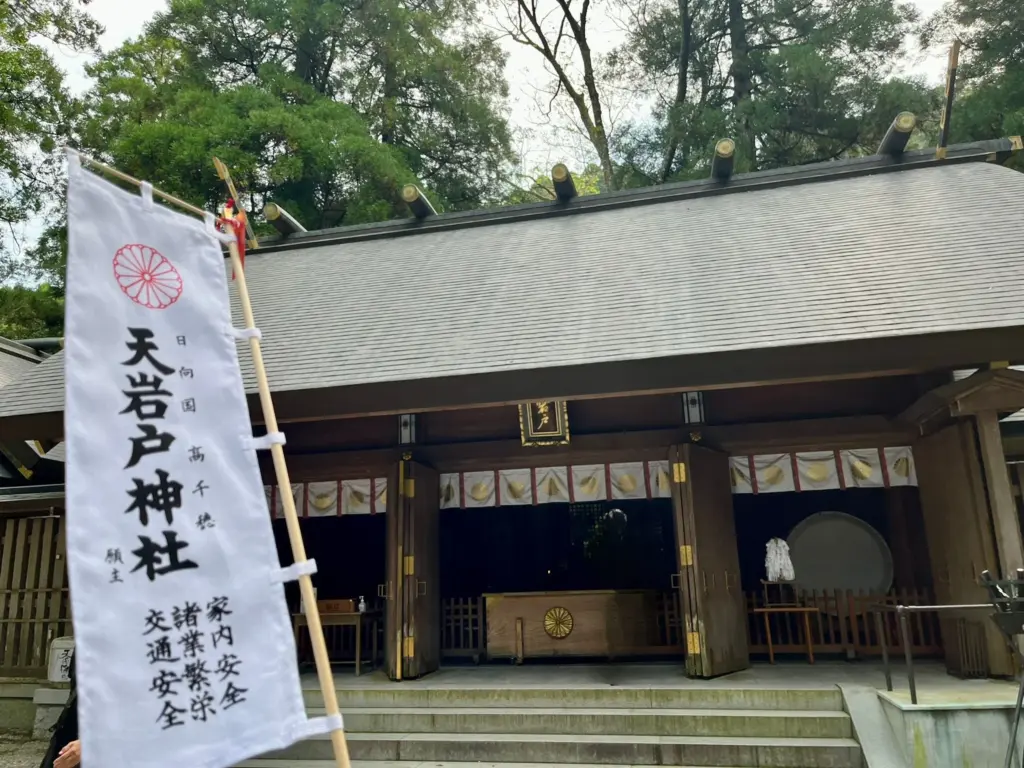
On the second day, we headed to the Takachiho area—about a two-hour drive from Miyazaki City.
Even the winding mountain roads flew by as we chatted along the way.
As the scenery outside the window gradually grew more mystical, our conversations seemed to flow more naturally too.
Our first stop was Amano-Iwato Shrine, a place deeply rooted in Japanese mythology.
This is the setting of the famous “Amano-Iwato” legend, where Amaterasu, the sun goddess, hid herself in a cave, plunging the world into darkness.
It is a space where light and shadow, stillness and prayer, seem to quietly intertwine.
According to the myth, with the sun goddess in hiding, the world fell into eternal darkness—crops failed, and illness spread across the land.
Deeper within the shrine grounds, you can see the sacred mountain said to house the very cave.
At the Nishihongu (West Shrine), visitors can view it with guidance from a shrine priest, and we were fortunate to join a guided visit.
Unfortunately, photography is not allowed, so I’m unable to share images.
Even so, the atmosphere there was truly extraordinary—both in its presence and its energy.
In the profound stillness, it felt as though the memory of the myth itself was still alive.
Ama-no-Yasukawara — Where the Gods Gathered
About a 10-minute walk from Amano-Iwato Shrine along the Iwato River, we followed a path deeper into the forest, guided by the gentle sound of the flowing water.
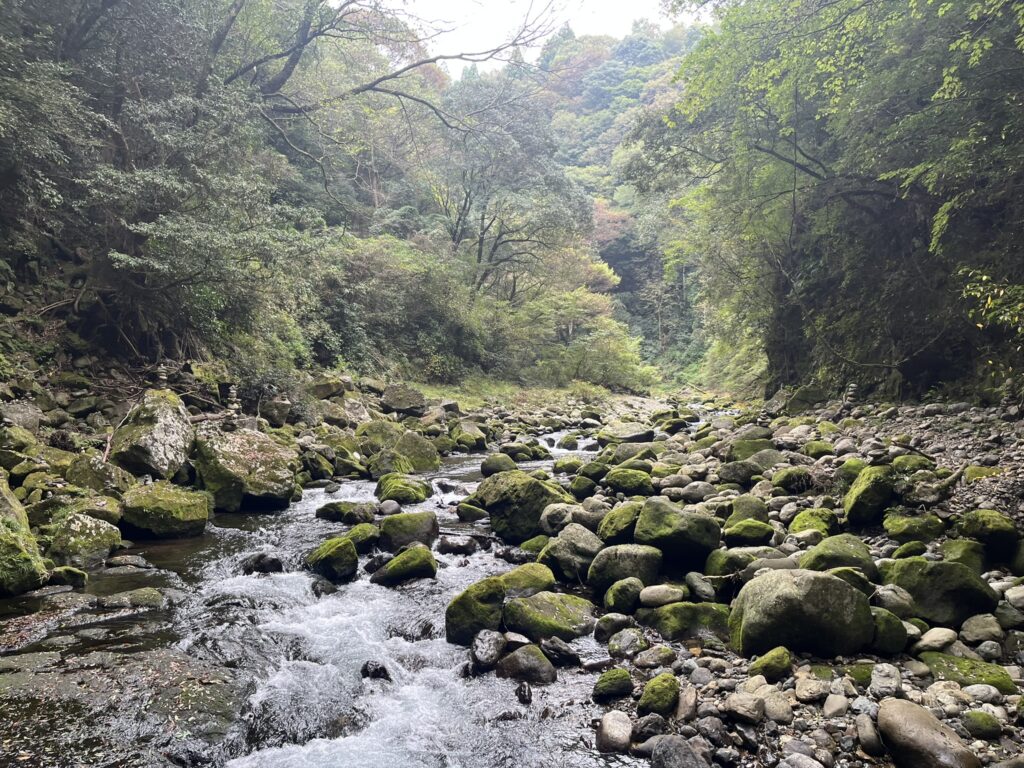
The trail itself felt soothing, and as we became enveloped in the stillness of the deep woods,
the mystical cave known as Amano-Yasukawara gradually revealed itself.
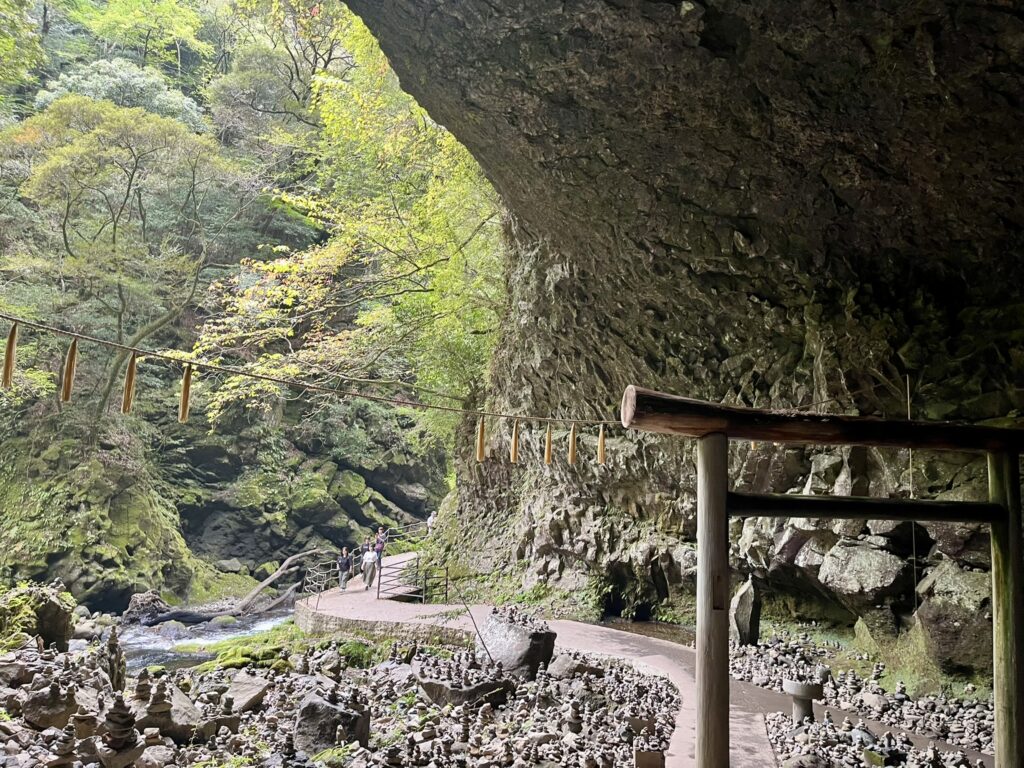
This is the very place where the countless gods of Japanese mythology gathered when Amaterasu, the sun goddess, hid herself in the cave, plunging the world into darkness.
Here, they held a council—sharing their wisdom, dancing and singing—as they devised a plan to lure her out of the cave and restore light to the world.
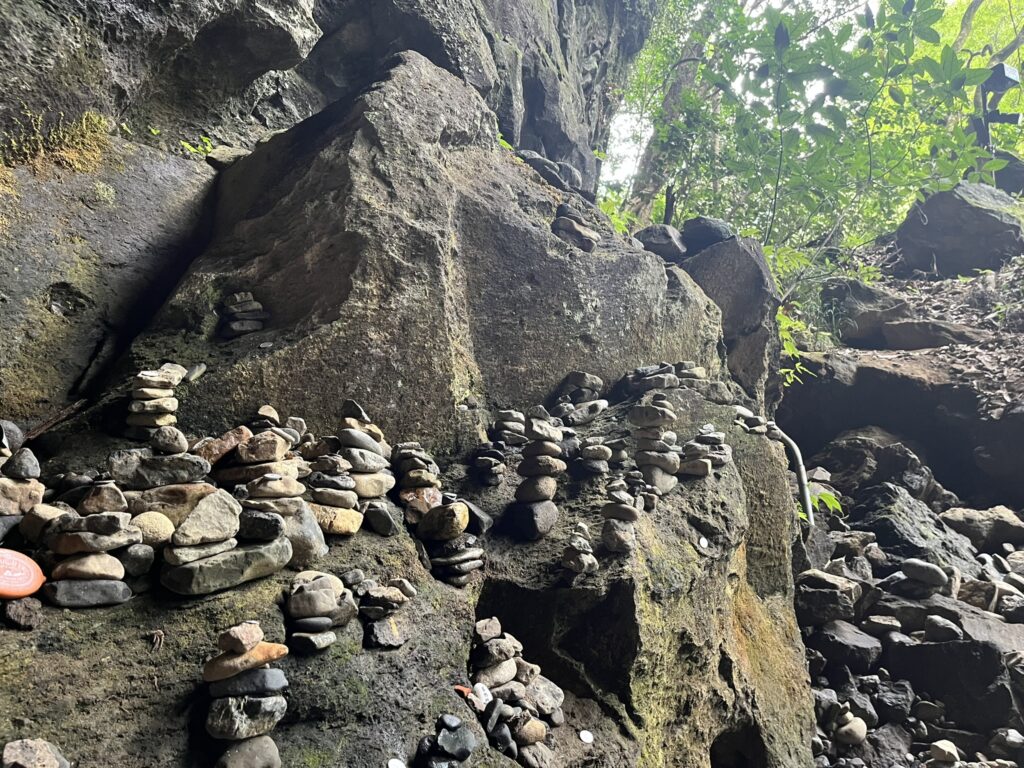
Inside the cave, countless small stones—carefully stacked by visitors with their wishes—lined the space.
Each one seemed to hold someone’s hope and prayer.
Standing there, I felt a quiet sense of connection that transcended time.
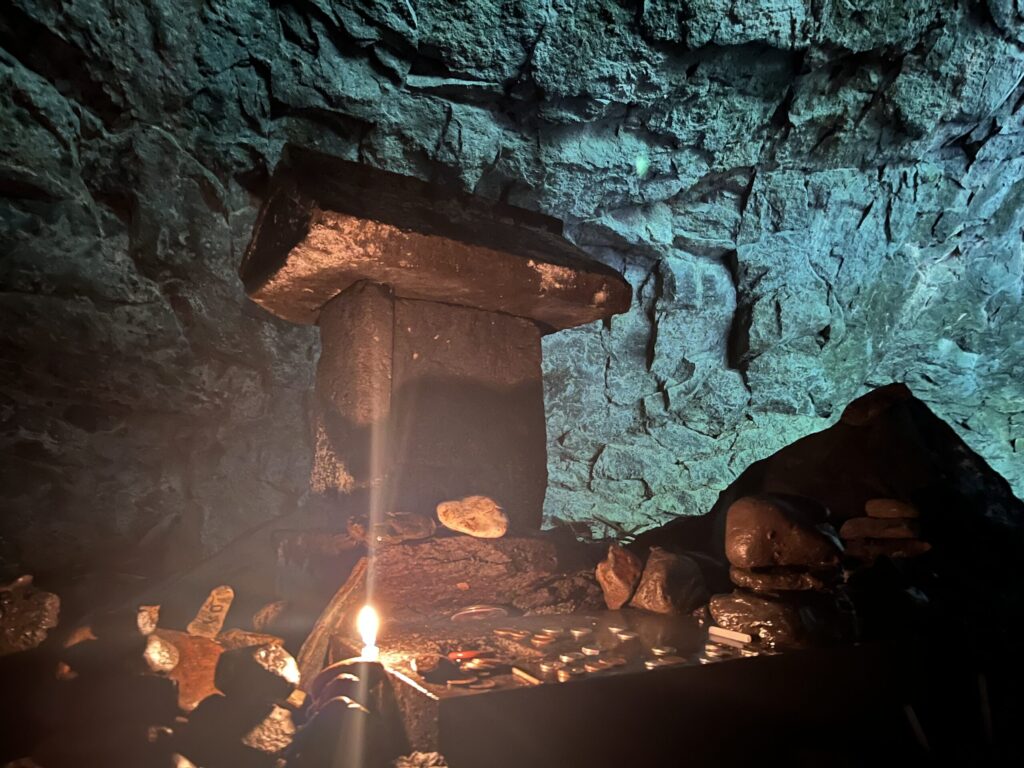
Behind the main sanctuary, there was also a place that seemed to radiate a special kind of energy…
I could truly feel that the presence of the gods still lives on in this sacred space.
Kushifuru Shrine — Where Heaven Meets Earth
Next, we visited Kushifuru Shrine and the Takamagahara Distant Worship Site, both believed to be connected to the descent of the heavenly grandson.
It’s about a 15-minute drive from Amano-Iwato Shrine.
According to Japanese mythology, this is where Ninigi-no-Mikoto, the grandson of Amaterasu (the sun goddess), descended from the heavenly realm of Takamagahara to rule the earth, carrying the Three Sacred Treasures.
In other words, this sacred place is considered the very stage of the “Tenson Kōrin” (the descent of the heavenly grandson).
Often described as a place where heaven and earth are connected, the energy here was simply breathtaking.
With every deep breath, it felt as though fresh energy was flowing deep into my body.
On the southern side of the shrine lies the Takamagahara Distant Worship Site, where it is said that the gods once stood on this hill and offered prayers toward the heavenly realm during the descent.
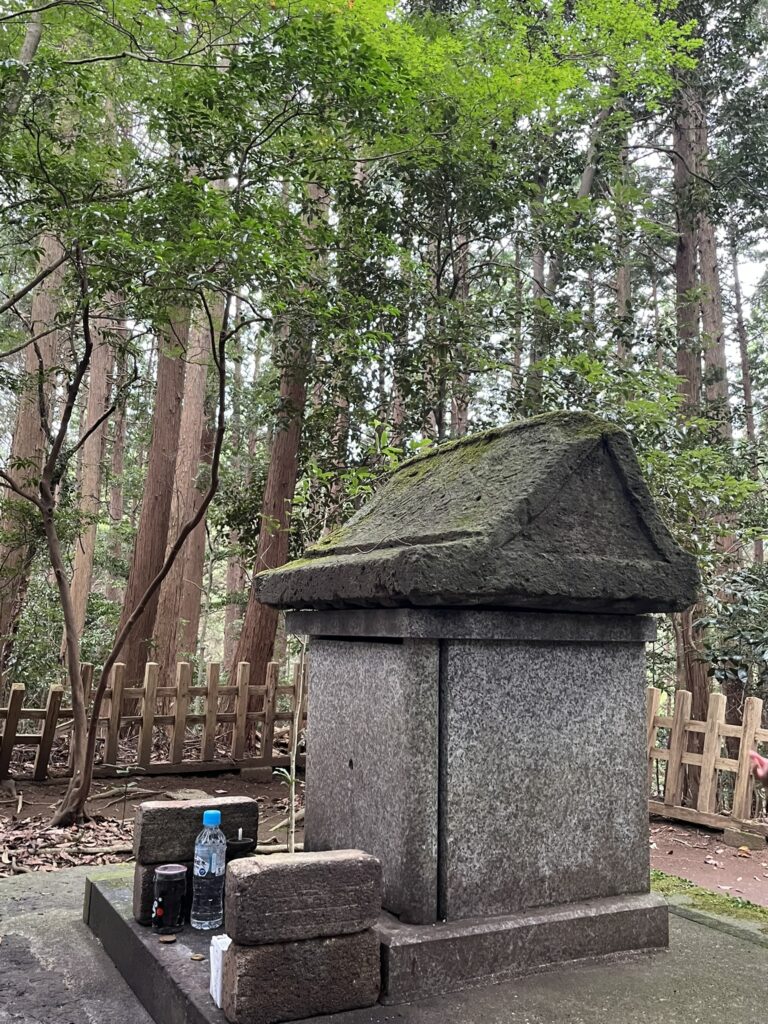
This entire area is a sacred place, filled with the energy of ancient mythology.
Surrounded by the crisp, tranquil air, I quietly felt that energy and allowed myself to fully receive it within.
Day 3: Returning to the Beginning
Eda Shrine — A Place of Origin
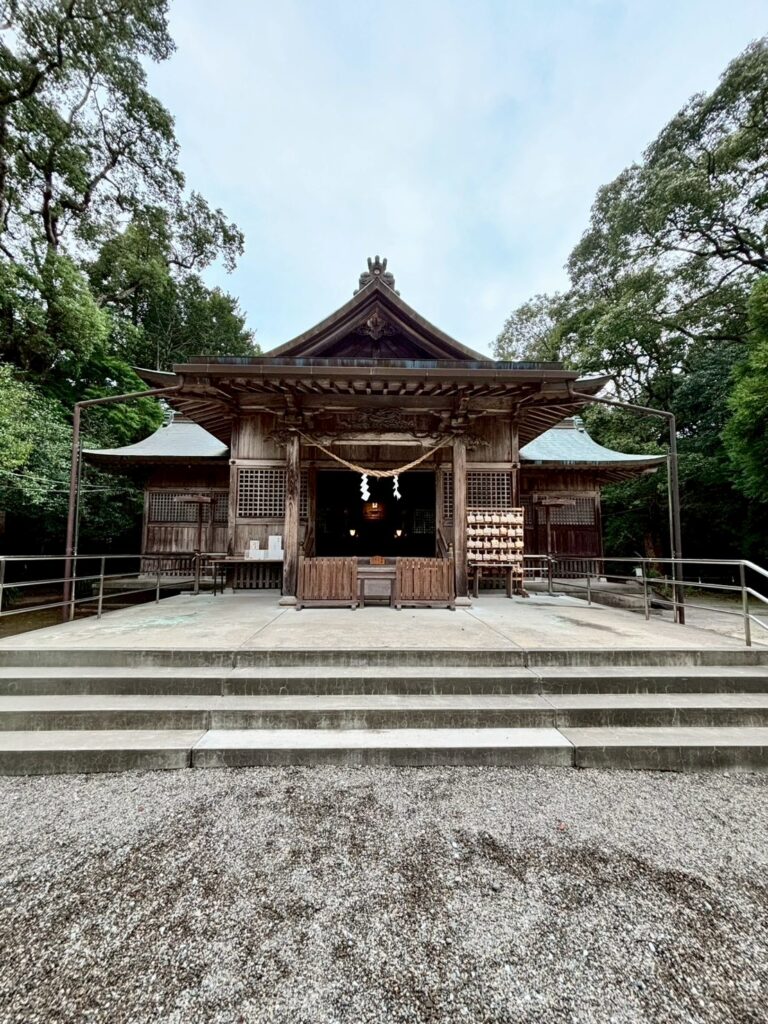
On the final day, we visited Eda Shrine, located about a 20-minute drive from central Miyazaki City.
Enshrined here are Izanagi-no-Mikoto and Izanami-no-Mikoto—known as the first divine couple in Japan and the creators of the land.
They are also revered as the “Yabo Futahashira Daimyōjin,” symbolizing the very beginning of Japan.
In fact, the surrounding area, known as Awagihara, holds profound significance in Japanese mythology.
It is the setting of an important and powerful story.
After losing his wife, Izanami-no-Mikoto, Izanagi-no-Mikoto followed her into the land of the dead.
However, having been defiled by the impurities of that realm, he performed a purification ritual (misogi) here in Awagihara.
As he washed his left eye, Amaterasu—the sun goddess—was born.
From his right eye came Tsukuyomi, and from his nose, Susanoo—the three most important deities in Shinto mythology.
In other words, this is the birthplace of misogi (ritual purification), the origin of sacred prayers (norito), and even the place where Amaterasu herself was born.
The air within the shrine grounds was serene and quiet, yet filled with a gentle but powerful energy.
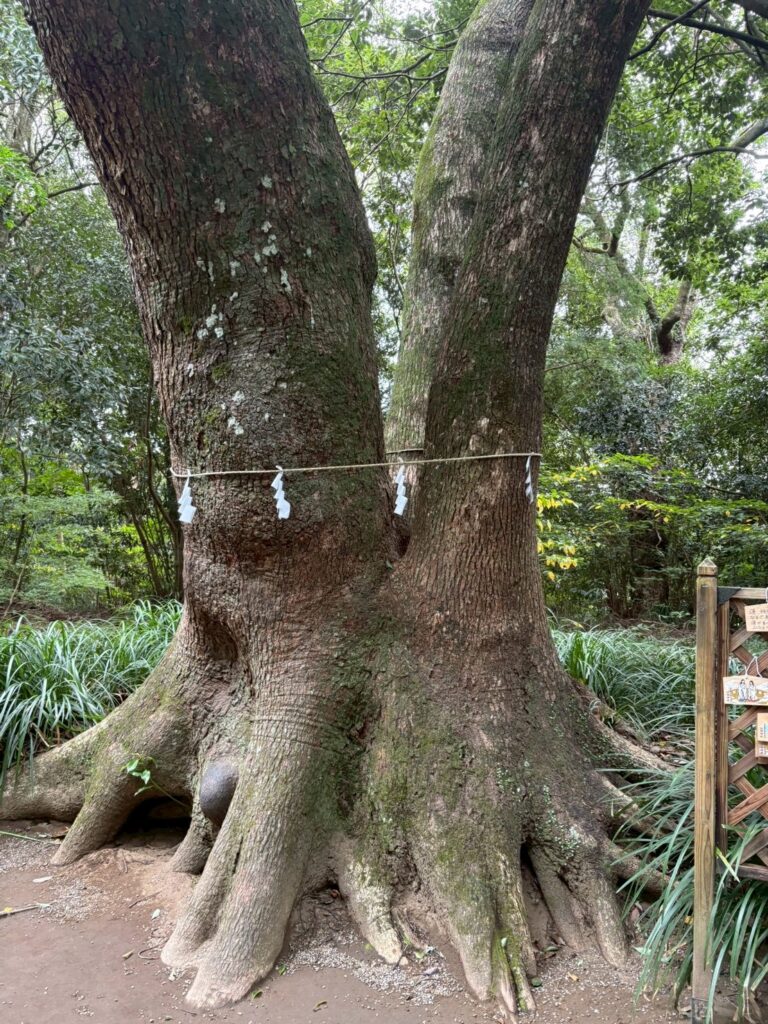
It is said that touching—or even embracing—the camphor trees along the approach path can bring you strength and blessings, so I quietly gave one a gentle hug.
Misogi Pond — A Place of Stillness
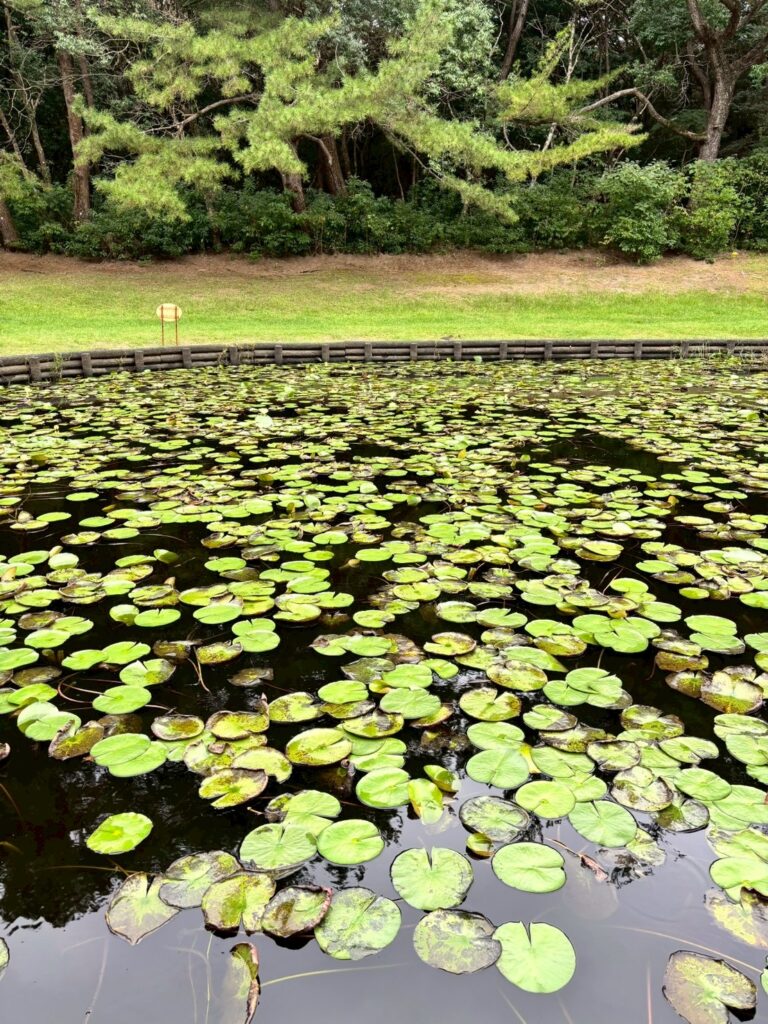
About a five-minute walk from Eda Shrine, within Awagihara Forest Park, lies Misogi Pond.
This is the very place where Izanagi-no-Mikoto is said to have performed his purification ritual, giving birth to the three deities.
Surrounded by trees, the still surface of the water was filled with a sacred energy.
Beautiful lotus flowers were blooming all across the pond, and the moment I stood before it,
I felt my mind gently clear, as if being purified by the quietness of the space.
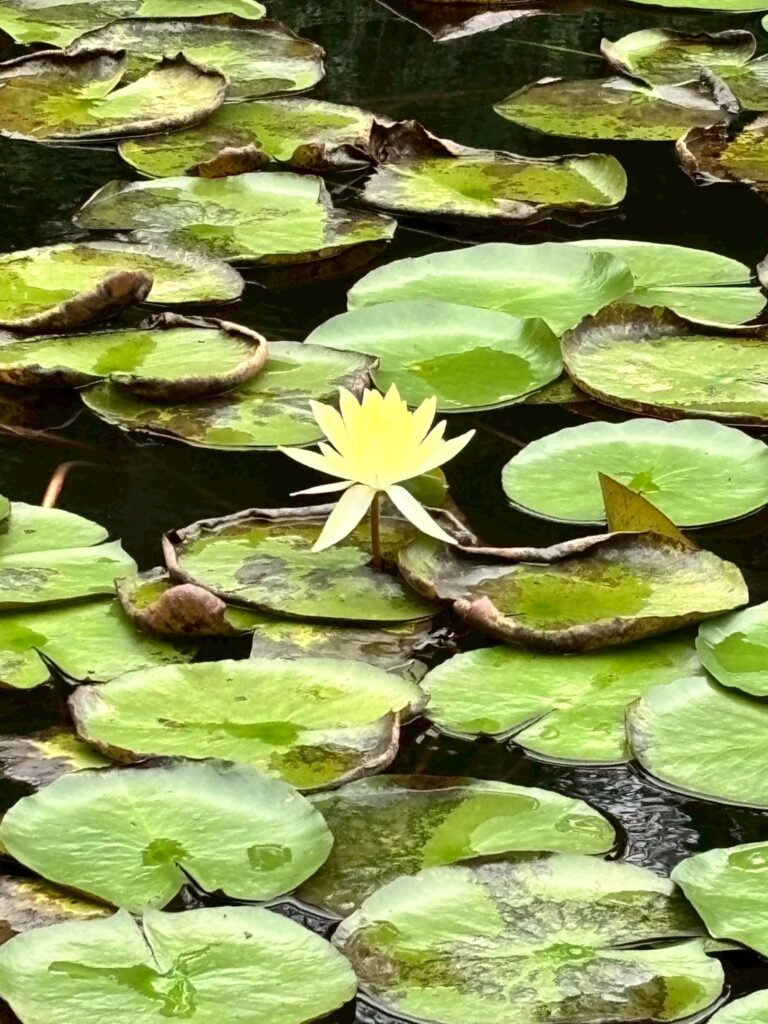
“Purification” isn’t about letting something go, but about gently bringing your inner self back into harmony—
that’s what the still surface of the water seemed to quietly teach me.
I took a deep breath there, allowing myself to fully soak in the lingering essence of the past three days.
And in this place, known as the beginning of Japan, I made a quiet promise to myself—to move forward with a renewed heart from tomorrow on.
Closing Thoughts | Returning to Yourself
As this retreat came to an end, stepping away from the noise of daily life and returning to nature allowed me to reset both my mind and body.
Surrounded by the abundance of nature, I could feel its energy on my skin and recharge myself deeply.
It wasn’t about thinking, but about simply feeling—with my whole body and all my senses.
More than anything, sharing laughter and heartfelt conversations with close, like-minded companions brought a deep sense of healing to my soul.
While visiting sacred places is meaningful, this journey also reminded me of the richness of spending time with people you truly trust.
The myths of Miyazaki are not just stories of the distant past—they are still alive in this land today.
The sound of the ocean, the breath of the forest, the stillness of the shrines— all of it gently guided me back to my true self.
By the end of these three days, I felt as though I had shed an old layer of myself and stepped onto a new starting line.
In the midst of our busy lives, it’s easy to lose sight of our inner center.
But by walking through this sacred land of myth, I was able to return to it once again.
If you’re feeling a little tired or disconnected right now, I hope you’ll take a moment to place yourself in nature—
whether it’s a nearby park or the quiet grounds of a shrine.
Simply allowing yourself to be held by the gentle breeze may be enough to lighten your heart.
And someday, I hope you’ll visit Miyazaki—
to be embraced by its myth, its nature, and its energy,
and to rediscover your true self. ✨
✨ Places We Visited ✨
Day 1 — Miyazaki City & Nichinan Area
- Udo Jingu
- Sun Messe Nichinan
- Aoshima Shrine
Day 2 — Takachiho Area
- Amano-Iwato Shrine
- Ama-no-Yasugawara
- Kushifuru Shrine
- Takamagahara Worship Site
Day 3 — Miyazaki City Area
- Eda Shrine
- Misogi Pond

Comments